
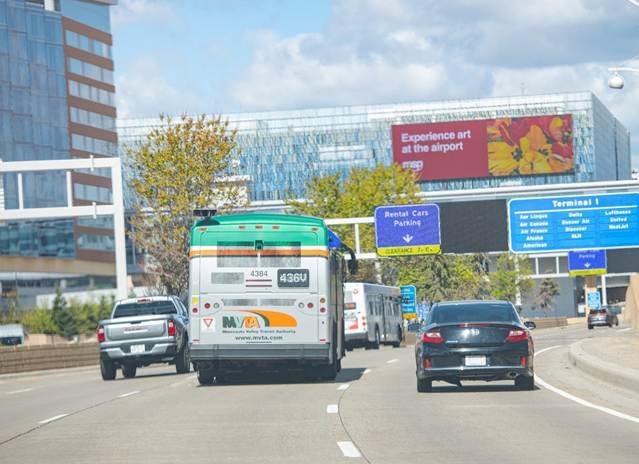
Route 436 ridership surged more than 100 percent over the past year due to Local Forward adjustments. The route, which serves Eagan, Viking Lakes, MSP Airport, and 46th Street Station, benefited from enhancements to regional and airport connectivity.
Published: November 5, 2026.
BURNSVILLE, MINNESOTA - The Minnesota Valley Transit Authority (MVTA) has received a Planning Excellence Award from the American Planning Association's Minnesota Chapter, recognizing an innovative transit planning initiative that has increased ridership, improved regional transportation connections, and strengthened operational efficiency across the southern Twin Cities metro.
The award recognizes MVTA's Local Forward initiative, a data-driven approach to evaluating, planning, and investing in public transportation services. The initiative moves beyond traditional measures of ridership and operating costs to consider community needs, demographic trends, employment opportunities, and future transit demand.
According to MVTA, the initiative has already produced measurable improvements, including a 7.6% systemwide ridership increase in 2026, despite significant budget reductions. Routes redesigned through Local Forward experienced an even greater increase, with ridership growing by 17%.
The recognition highlights MVTA's efforts to improve suburban transit service while balancing financial sustainability with accessibility for residents, workers, students, and others who rely on public transportation.
Ridership Increases Following Route Improvements
Several MVTA routes have experienced substantial ridership increases following changes implemented through the Local Forward planning process.
Among the most notable improvements:
Route 420: Ridership increased 36% following improvements to connections serving Dakota County Technical College and other destinations.
Route 436: Ridership surged 133% after enhancements to regional transportation connections and airport accessibility.
Routes 495 and 4FUN: Consolidating the two services increased ridership by 18% while simplifying operations and improving efficiency.
MVTA officials say these improvements demonstrate how strategic service changes can attract additional riders without necessarily increasing overall operating expenses. Rather than maintaining existing routes solely because they have historically operated in certain areas, Local Forward evaluates whether adjustments to schedules, destinations, connections, or route structures could better serve current and potential riders.
“Local Forward represents a fundamental shift in how we think about transit service and our responsibility to the communities we serve,” said Luther Wynder, MVTA Chief Executive Officer.
“Rather than simply looking at what isn’t working, we’re identifying opportunities, listening to our communities, and making strategic investments that deliver better results. We’re demonstrating that improved efficiency and expanded access can go hand in hand.”
A Different Approach to Planning Suburban Transit
Traditional transit planning often focuses heavily on the number of passengers using a particular route and the cost of providing that service. While those measures remain important, MVTA officials say they do not always capture the full transportation needs of suburban communities, where residential development, employment centers, and travel patterns can differ significantly from those in urban areas.
Local Forward addresses those challenges by combining existing operational data with a broader assessment of where public transportation could provide the greatest benefit. A central component of the initiative is MVTA's Transit Propensity Index (TPI), an internally developed planning tool that estimates potential demand for transit service in different areas.
The index considers several factors, including population and employment density, household income, vehicle availability, disability status, and other demographic characteristics. By analyzing these factors alongside ridership and operating expenses, MVTA planners can better identify routes that may benefit from restructuring, additional investment, partnerships, or consolidation.
The approach also helps distinguish between underperforming routes that have opportunities for growth and those serving areas where demand for traditional fixed-route transit may be limited.
“Traditional ridership and cost measures only tell part of the story, particularly in suburban communities where development patterns and travel needs are constantly changing,” said Eric Callison, MVTA Transit Planning Manager.
“Local Forward gives our planners a much more complete picture. We’re looking beyond today’s ridership to understand where transit is needed, where improvements can make a difference and how we can use limited resources more effectively.”
Reducing Costs While Maintaining Transportation Access
In addition to increasing ridership, Local Forward has helped MVTA address financial pressures facing public transportation agencies. Since 2023, MVTA reports reducing high-subsidy platform hours by 27% while maintaining access to essential destinations throughout its service area.
High-subsidy service generally refers to routes or operating periods requiring substantial public funding relative to the number of passengers served. Reducing those hours lets the agency direct resources to services with stronger demand or greater potential to meet community transportation needs.
By the end of 2026, MVTA expects Local Forward to have guided the elimination of seven high-subsidy routes and the restructuring of six additional routes. Although eliminating or restructuring routes can affect existing riders, MVTA says its planning process considers access to essential destinations and community transportation needs alongside financial performance.
The agency's reported results suggest that service consolidation and targeted improvements can increase overall ridership even as some higher-cost operations are reduced.
Connecting Residents to Jobs, Healthcare, and Education
MVTA emphasizes that Local Forward's success is measured by more than passenger counts. The agency also evaluates how effectively its transit network connects communities with employment, education, healthcare, shopping and other essential services.
According to MVTA, routes evaluated through the initiative provide transportation access within walking distance to approximately:
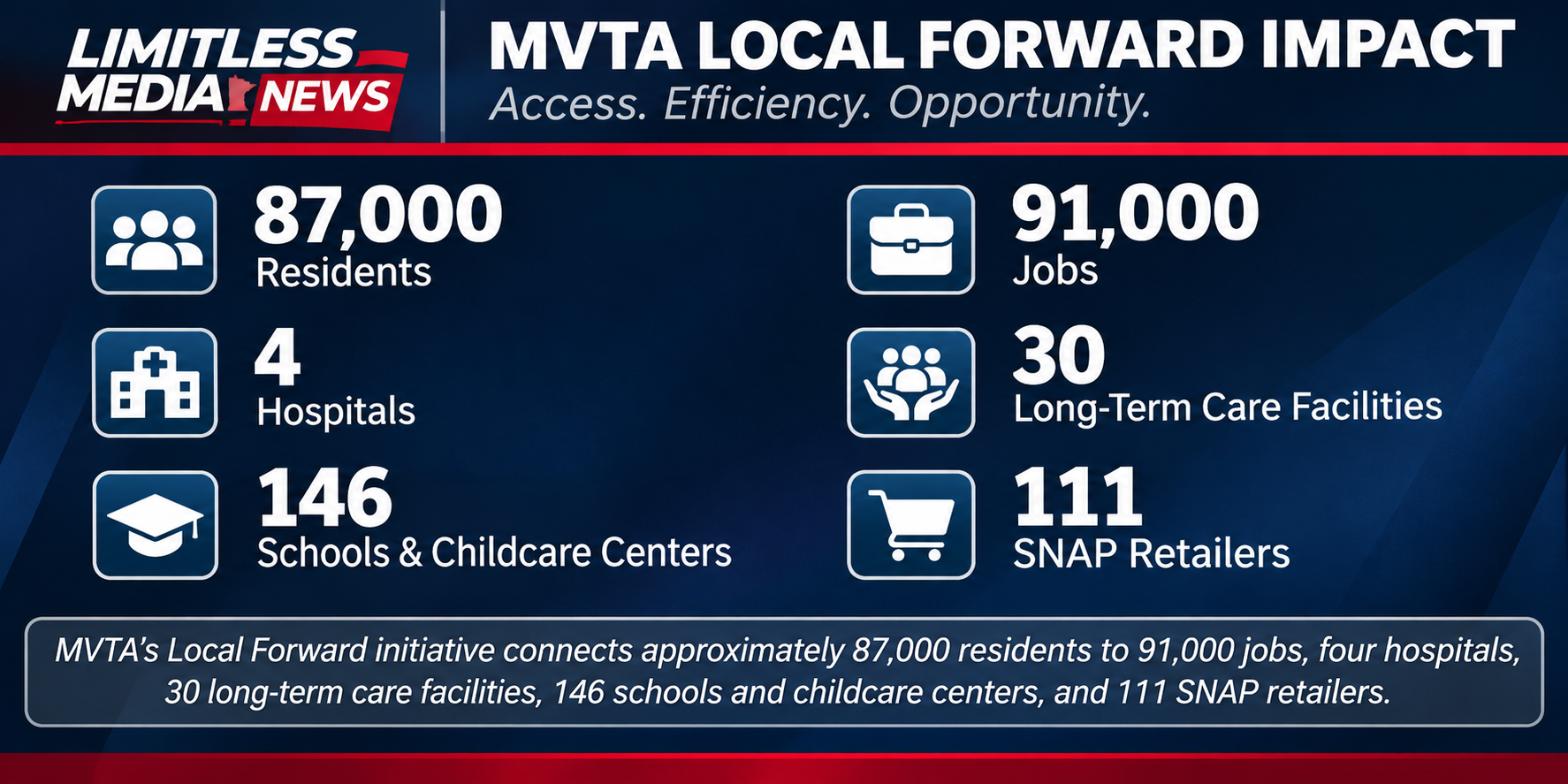
These connections are especially important for people without reliable access to a personal vehicle, including some older adults, people with disabilities, students, and lower-income households. Access to employment centers can also benefit local businesses by expanding transportation options for current and prospective employees.
MVTA's approach considers these broader community benefits when determining whether to maintain, modify, or invest in particular transit services.
Community Feedback Plays a Central Role
Public engagement has been another major component of Local Forward. Rather than relying exclusively on ridership statistics and internal planning studies, MVTA has sought input directly from passengers, community organizations, employers, and local governments.
The agency has conducted onboard rider outreach, transit station events, surveys, and public meetings to better understand transportation challenges and identify opportunities for improvement. MVTA has also worked with educational institutions and employers to evaluate how transit schedules and routes align with commuting patterns and access to schools.
Feedback from the South Metro Transit Coalition of Businesses has helped the agency better understand employee transportation needs, including connections between residential areas and major employment destinations. This engagement allows planners to consider concerns that may not be immediately apparent in ridership data, such as inconvenient transfer connections, gaps in service coverage, or schedules that do not align with work shifts.
An Ongoing Strategy for the South Metro
Unlike a traditional transit study that produces a set of recommendations at a single point in time, Local Forward is designed to function as an ongoing planning and evaluation process. MVTA continually analyzes service performance, reviews demographic and employment trends, engages with communities and monitors the results of implemented changes.
This approach allows the agency to make additional adjustments as development patterns, transportation needs, and available funding change. MVTA officials also believe the methodology could serve as a model for other suburban transit agencies facing similar challenges. Because the initiative relies on demographic, employment, and operational data that are generally available to transit planners, other agencies may be able to adapt its methods without developing entirely new data collection systems.
For communities throughout the southern Twin Cities metro, the initiative aims to make public transportation more responsive to changing travel patterns while ensuring limited funding is used effectively. The Planning Excellence Award from the American Planning Association's Minnesota Chapter recognizes those efforts and the measurable results MVTA has reported through Local Forward.
With ridership increasing on redesigned routes and additional service adjustments expected through the end of 2026, MVTA plans to continue using the initiative to guide future transportation investments and improve connections throughout its service area.
Written by: Will Wight
