
MnDOT Plans Major Highway 77 (Cedar Avenue) Resurfacing, Bridge Repairs Across South Metro Corridor
TWIN CITIES SOUTH METRO, MINNESOTA – A major road construction project is set to impact one of the Twin Cities metro’s busiest north-south corridors, as the Minnesota Department of Transportation (MnDOT) prepares to begin work on Highway 77, also known as Cedar Avenue, beginning in July 2026 and is projected to be ongoing through November 2028.
The project will stretch through multiple south metro communities, including Apple Valley, Burnsville, Eagan, and Richfield, and is aimed at improving aging pavement conditions and maintaining critical infrastructure along the corridor.
Project Overview
MnDOT plans to repair and resurface Highway 77 between 138th Street in Apple Valley and the Minnesota River bridge in Eagan. In addition to roadway improvements, crews will repair 10 bridges along the route.
Key components of the project include:
Full pavement resurfacing to improve ride quality
Structural repairs to 10 bridges and ramps
Accessibility upgrades to meet current standards
Drainage system updates
Ramp widening in select areas
Bridges and ramps scheduled for repair include several high-traffic connections near the I-494 interchange, including ramps over American Boulevard, Killebrew Drive, Lindau Lane, and 81st Street.
MnDOT says the work is necessary as pavement along the corridor continues to age, with current conditions ranging from “fair” to “good,” but expected to deteriorate more rapidly without intervention.
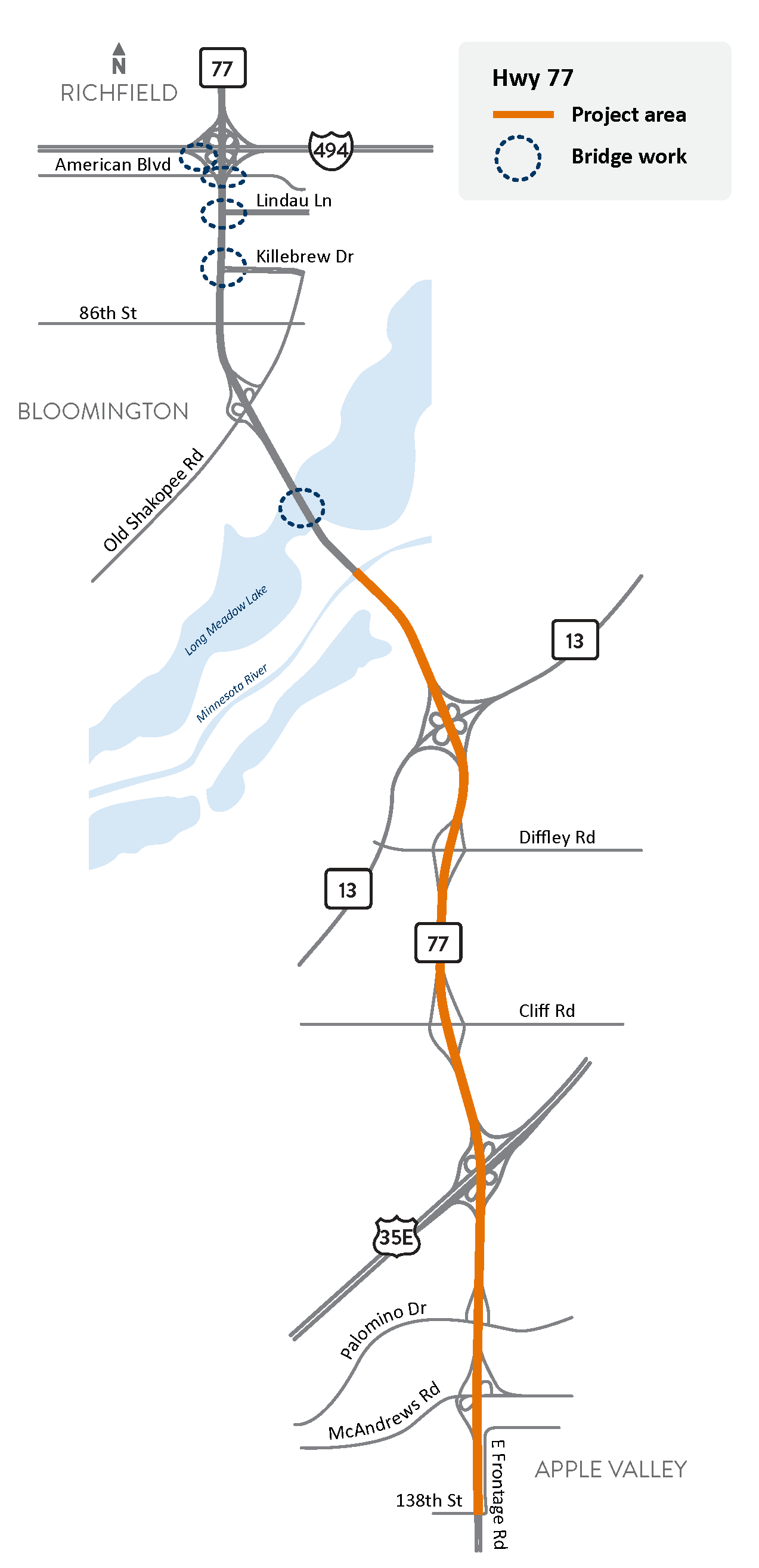
Highway 77/Cedar Avenue Resurfacing and Repair Project.
Traffic Impacts Expected
While specific timelines and closures are still being finalized, MnDOT is warning drivers to prepare for significant impacts during construction from July 2026 through November 2028.
Motorists can expect:
Lane, ramp, and bridge closures
Weekend construction shutdowns
Reduced lanes during peak construction periods
Head-to-head traffic configurations in 2027
During the 2027 construction season, Highway 77 will operate with reduced lanes and crossover traffic, allowing crews to rebuild one side of the roadway at a time.
Pedestrians and cyclists will also be affected. The pedestrian path on the Minnesota River bridge is expected to close temporarily, with a detour routed via the Interstate 35W crossing.
Despite the disruptions, MnDOT says access to homes and businesses along the corridor will be maintained throughout the project.
No Funding for Capacity Improvements
Although the project addresses pavement and infrastructure needs, MnDOT confirmed that there is currently no funding available for larger traffic mobility improvements, a key concern given the corridor’s congestion issues.
That means the project will not significantly expand roadway capacity or directly address long-term traffic demand challenges at this time.
Longstanding Congestion and Safety Concerns
The 2026 construction project follows a multi-year corridor study conducted between December 2020 and June 2022 in partnership with local cities. The study identified several persistent issues along Highway 77:
Increasing Traffic Demand
Traffic volumes along the corridor regularly exceed the road’s capacity, leading to:
Frequent congestion
Unreliable travel times
Delays for commuters, buses, and freight traffic
Complex Merging and Weaving
Numerous areas along Highway 77 feature:
Merging lanes
Diverging ramps
Weaving traffic patterns
These conditions increase both congestion and crash risk. Officials identified five high-risk locations northbound and nine southbound where these issues are most pronounced.
Aging Infrastructure
Out of approximately 30 bridges along the corridor:
Three are nearing the end of their service life
Ongoing maintenance is required to ensure safety
Pedestrian and Bicycle Barriers
The highway acts as a significant barrier for non-motorized users, with:
Limited crossing opportunities
Inconsistent sidewalk connectivity
Safety concerns for pedestrians and cyclists
About Highway 77
Highway 77 serves as a critical regional connector, linking northern Dakota County communities to the Twin Cities core.
The roadway features varying speed limits and lane configurations:
45 mph south of 135th Street
65 mph between 135th Street and I-494
55 mph north of I-494
Lane configurations also vary, with sections ranging from two to three lanes in each direction, along with auxiliary lanes near ramps. Heavy traffic entering and exiting, particularly near major interchanges, limits the corridor’s efficiency and contributes to recurring congestion.
Looking Ahead
MnDOT says additional details on construction timelines, closures, and detours will be released as the project approaches. While the upcoming work is expected to improve pavement conditions and extend the corridor's life, officials acknowledge that broader solutions to congestion and mobility challenges will require future funding and planning.
For now, drivers who rely on Highway 77 should prepare for multi-year construction impacts beginning in July 2026, followed by continued traffic adjustments into 2027, before the project is projected to be finished in the fall of 2028.
Written by: Will Wight
