
West Nile Virus Detected in Dakota, Hennepin, and Ramsey County Mosquitoes for First Time in 2026
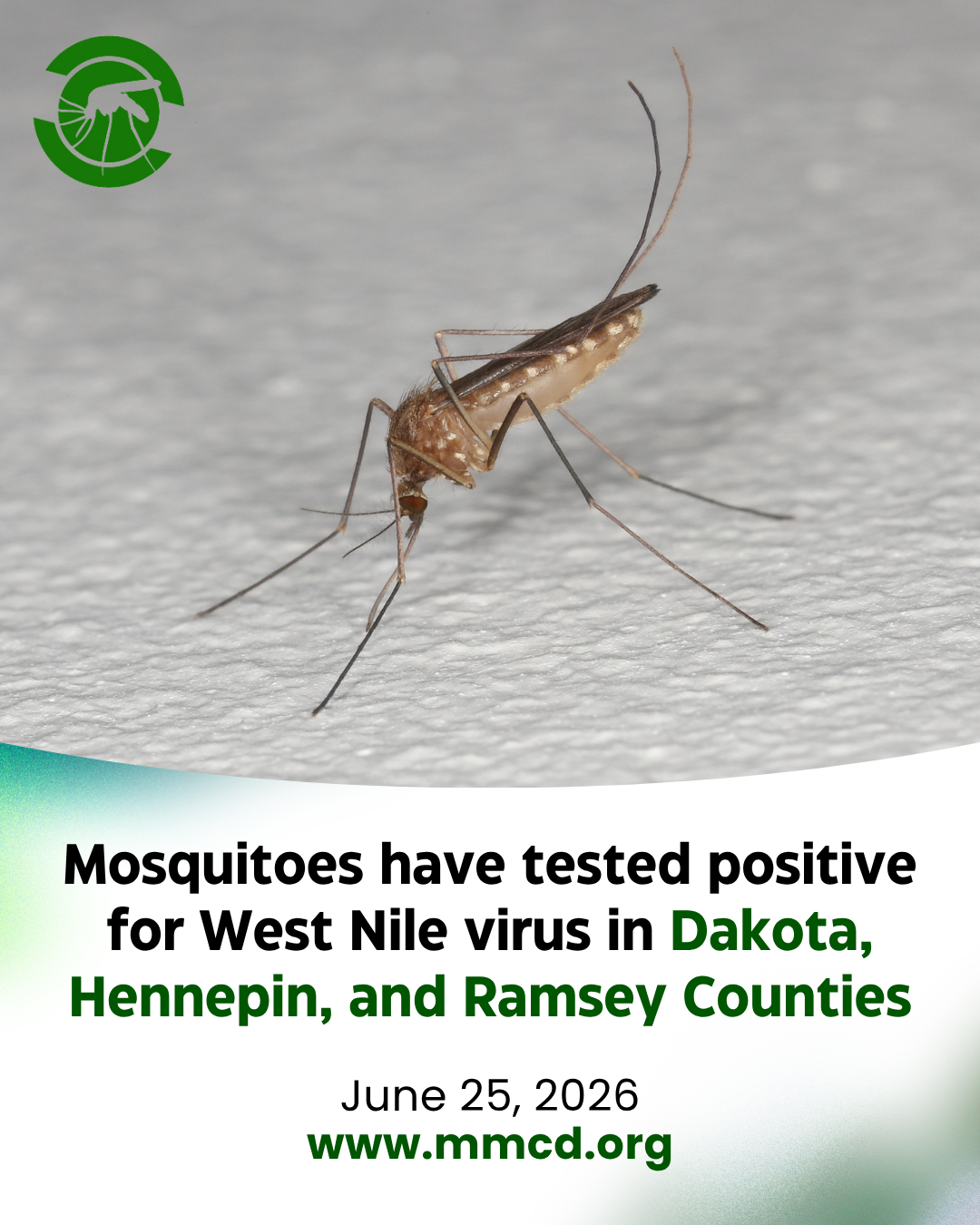
TWIN CITIES, MINNESOTA - Health officials are urging residents across the Twin Cities metro to take precautions against mosquito bites after the first mosquito samples of 2026 tested positive for West Nile virus in Dakota, Hennepin, and Ramsey counties.
The Metropolitan Mosquito Control District (MMCD) announced that mosquitoes collected from one location in Dakota County, one location in Hennepin County, and two locations in Ramsey County tested positive for West Nile virus. The mosquito samples were collected on June 17, 2026, and analyzed by MMCD Vector Ecologist Dr. Jordan Mandli using the Rapid Analyte Measurement Platform (RAMP) testing method.
According to MMCD, these are the first confirmed West Nile virus-positive mosquito samples of the 2026 season and are appearing around the same time the virus typically begins circulating each summer.
Record-Breaking 2025 Season Raises Concern
The detection comes after Minnesota experienced its worst recorded year for West Nile virus in 2025, with more than 120 human cases reported statewide, including approximately 50 cases in the Twin Cities metropolitan area.
Health officials say one factor contributing to last year's surge was an unusually large population of Culex tarsalis, the mosquito species considered the most efficient at transmitting West Nile virus to humans.
So far this year, MMCD says Culex tarsalis populations remain significantly lower than at this point in 2025, largely due to below-average rainfall, which has reduced ideal mosquito breeding habitat.
Even so, officials caution that the virus is now present and residents should begin taking preventative measures.
Additional Mosquito Surveillance Underway
MMCD says it is taking a proactive approach by increasing mosquito surveillance throughout the metro area and evaluating whether additional mosquito control treatments are warranted in locations where virus activity appears elevated.
The agency works closely with the Minnesota Department of Health to monitor West Nile virus activity in mosquitoes, birds, horses, other animals, and humans, and to implement mosquito control measures designed to reduce the risk of transmission.
MMCD provides mosquito control services throughout the seven-county Twin Cities metropolitan area.
How West Nile Virus Spreads
West Nile virus is the most common mosquito-borne disease in Minnesota. The virus naturally cycles between birds and mosquitoes. Mosquitoes become infected after feeding on infected birds and can then spread the virus to humans and animals through subsequent bites.
Humans and other mammals are considered "dead-end hosts," meaning they do not carry enough virus in their bloodstream to infect additional mosquitoes, preventing further transmission.
The mosquito species most commonly associated with transmitting the virus in Minnesota include:
Culex pipiens
Culex restuans
Culex tarsalis
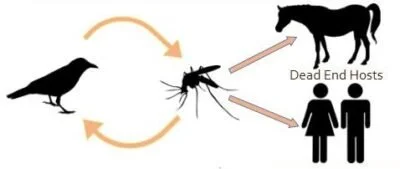
The West Nile Virus transmission cycle.
Provided by MMCD Website.
Most Infections Cause No Symptoms
Health officials note that infection with the West Nile virus is relatively uncommon. Approximately 85 percent of infected people experience no symptoms at all.
When symptoms do occur, they are typically mild and may include:
Fever
Headache
Body aches
Occasionally, a skin rash
Swollen lymph nodes
However, a small percentage of infections become severe.
Serious illness may include:
High fever
Severe headache
Neck stiffness
Confusion or disorientation
Tremors
Convulsions
Muscle weakness
Paralysis
Coma
Officials estimate that only about one in every 150 people infected develops severe illness, but among those severe cases, 10 to 15 percent can be fatal.
Adults over age 50 face the greatest risk of developing serious complications following infection.
Residents Encouraged to Protect Themselves
With mosquito season underway, MMCD is encouraging residents and visitors throughout the Twin Cities metro to reduce their risk of exposure by taking simple preventative measures.
Officials recommend:
Stay indoors whenever possible during dawn and dusk, when many mosquitoes are most active.
Wear loose-fitting long-sleeved shirts and long pants while outdoors.
Apply an EPA-registered insect repellent to exposed skin.
Eliminate standing water around homes by emptying buckets, flowerpot saucers, bird baths, old tires, and other containers where mosquitoes can breed.
Health officials say preventing mosquito bites remains the most effective way to reduce the risk of West Nile virus infection as mosquito activity increases throughout the summer.
As surveillance continues, MMCD and the Minnesota Department of Health will continue monitoring virus activity and provide updates if additional positive mosquito samples or human cases are identified.
The MMCD reports that the hot, humid conditions across Minnesota have contributed to ideal breeding conditions for mosquitoes, particularly those capable of spreading the virus. While most people infected with WNV show no symptoms, some may develop fever, headache, body aches, joint pain, vomiting, diarrhea, or rash. Severe cases can lead to neurological illness such as encephalitis or meningitis.
Additional Resources:
The MMCD will continue to monitor mosquito populations and update the public as conditions evolve. In the meantime, residents are encouraged to stay informed and take the necessary steps to protect themselves and their families.
For more information, visit the Metropolitan Mosquito Control District website.
Written by: Will Wight
