
Bear on the Move: Black Bear Sighted in Burnsville Following Reports Across South Metro
Published: May 29, 2026
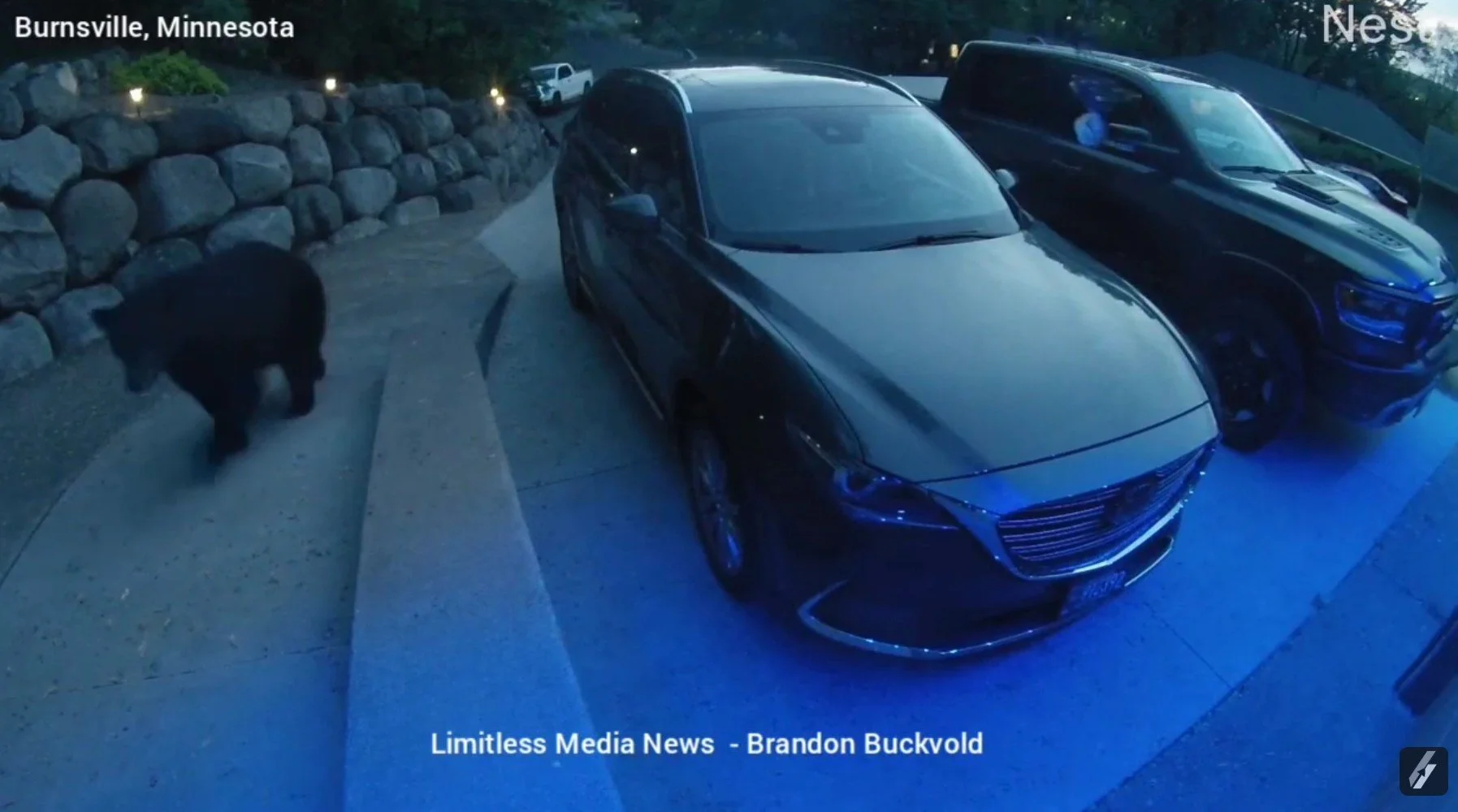
BURNSVILLE, MINNESOTA - Residents in Burnsville reported at least two sightings of a black bear Thursday evening, May 28, 2026, near Woodhill Road in the area of the Highway 13 and I-35W interchange.
The sightings were reported around 9 p.m., prompting interest and concern from local residents who observed the animal moving through the area. Videos shared by Brandon Buckvold and his neighbor from a security camera appear to show a younger black bear traveling through the neighborhood.
Limitless Media News reached out to the Minnesota Department of Natural Resources (DNR) for additional information regarding the sightings.
According to Andrew Tri, Bear Project Leader with the Minnesota DNR's Forest Wildlife Populations and Research Group, the bear seen in Burnsville is likely a young male traveling through the area rather than an animal that has permanently established itself in the community.
"DNR Bear Research is based out of Grand Rapids and we don't know anything in particular about this specific sighting, aside from it being in Burnsville," Tri said. "I've seen the security camera videos and it looks like a younger bear just wandering through."
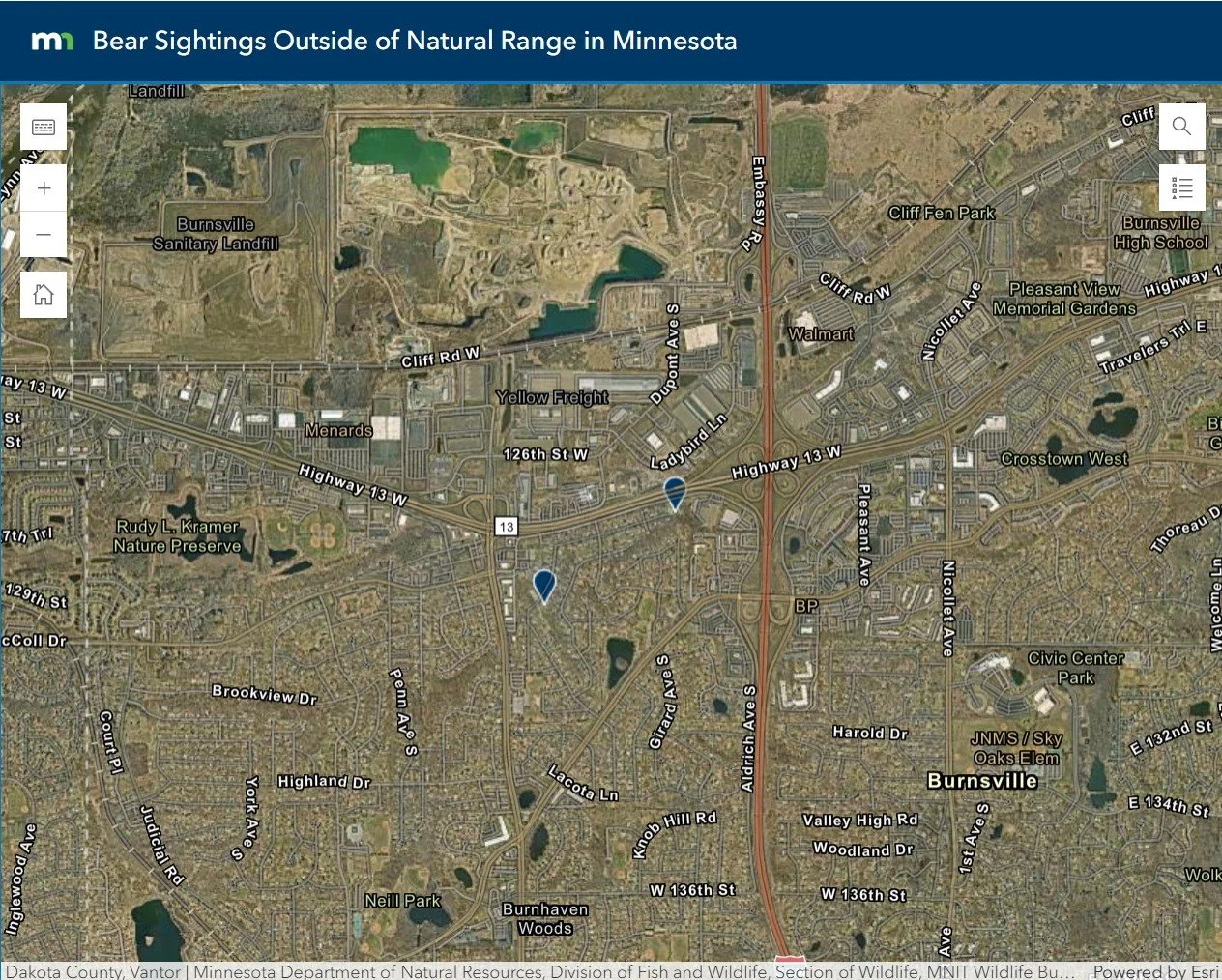
Tri noted that based on reports submitted to the DNR's bear sighting database, the Burnsville bear may be the same animal that was reported in nearby communities during the past several days.
"Looking at our sightings map, it's probably the same bear spotted yesterday and this morning in the area," he said. "There have been a number of sightings of a bear—hard to know if it's the same one—along the Minnesota River and along stream corridors in Chaska, Shakopee, and Savage over the last week."
Why Bears Are Appearing in the South Metro
While black bears are often associated with northern Minnesota, wildlife experts say spring and early summer are among the most common times for bears to appear in unexpected locations throughout the Twin Cities metropolitan area.
"This is the time of year in which young bears are dispersing and we find them in places that people don't expect," Tri explained.
Young male bears frequently leave their mother's territory and travel long distances in search of their own habitat. At the same time, adult males actively search for females during the breeding season, leading to increased movement across large areas.
"These are almost always males looking to find a new place to live, but wandering long distances to do so," Tri said. "Similarly, males are seeking females because it's breeding season, and they go on long forays to find a mate."
According to the DNR, bears moving through the south metro often follow natural travel corridors such as rivers, creeks, wetlands, and wooded stream corridors. The recent sightings along the Minnesota River Valley in communities including Chaska, Shakopee, Savage, and now Burnsville fit that pattern.
"Generally, the pattern for bears in the south and west metro often follows the river corridors and pops up on the edge of town," Tri said. "Based on the sightings so far, it's probable that the bear was moving along the river and did just that."
What To Do If You Encounter a Bear
The Minnesota DNR emphasized that residents should remain calm if they see a black bear.
"Don't panic," Tri said. "Bears in the south metro are becoming more common here. They are not inherently dangerous, but they are large wild animals, and they need their space."
The DNR encourages residents to follow the six BearWise® basics to reduce the likelihood of attracting bears into neighborhoods:
Never feed or approach bears.
Secure food, garbage, and recycling containers.
Remove bird feeders when bears are active, generally from April through October.
Never leave pet food outdoors.
Clean and properly store grills after use.
Alert neighbors to bear activity so they can take similar precautions.
Residents who observe a bear are encouraged to report the sighting through the Minnesota DNR's online bear sighting reporting system. The agency uses those reports to track bear movements and update range maps throughout the state. Report A Bear Sighting: https://www.dnr.state.mn.us/hunting/bear/bear-sightings.html
The DNR also advises residents experiencing ongoing conflicts with bears, even after taking preventative measures, to contact their local wildlife manager for additional assistance and guidance.
As of Friday morning, there were no reports of injuries, property damage, or aggressive behavior associated with the Burnsville bear sightings. Wildlife officials believe the animal is likely continuing its journey through the region in search of suitable habitat.
Written by: Will Wight
