
Smart Salting: How Minnesotans Can Protect Local Lakes and Rivers While Keeping Winter Walkways Safe
Published: November 28, 2025
TWIN CITIES, MINNESOTA – With winter season upon us and additional snow on the way, we wanted to talk about how residents can clear and salt their driveways and sidewalks more effectively with help and tips from the Minnesota Pollution Control Agency (MPCA). Environmental experts are urging a different approach this year: salt smarter.
Chloride, the key ingredient in most winter deicers, may help keep ice at bay, but it comes with a steep, long-lasting environmental cost. Unlike snow, salt doesn’t melt, disappear, or naturally break down. Once chloride washes into lakes, rivers, wetlands, or groundwater, it stays there forever. According to the MPCA, the Twin Cities use an estimated 365,000 tons of salt every winter, and 78% of it ends up in local waters or groundwater. Just one teaspoon of salt can permanently pollute five gallons of water. Several Minnesota lakes, streams, and wetlands are now contaminated with chloride, which is impacting aquatic life, disrupting ecosystems, and increasing long-term infrastructure costs.
As winter ramps up, agencies and environmental organizations are asking Minnesotans to play an essential role in reducing pollution, saving money, and maintaining safe winter surfaces.
Why Salt Is a Growing Environmental Problem
Chloride from road salt is virtually impossible to remove once it’s in a water body. Over time, this accumulation increases salinity levels, stressing or killing freshwater organisms and diminishing overall water quality. Fish, insects, amphibians, and native plants are all affected. Higher chloride levels can also corrode roads, bridges, pipes, and concrete, raising long-term maintenance costs for cities and homeowners alike.
Smart Salting Tips for Homeowners
Environmental agencies and watershed districts across Minnesota are promoting “smart salting” techniques that dramatically reduce chloride pollution without compromising safety.
1. Shovel Early, Shovel Often
Clearing snow before it gets packed down may mean you don't need salt at all. Fresh, powdery snow is much easier to remove, and staying ahead of accumulation reduces ice formation. A variety of tools, push shovels, scoop shovels, ice chisels, and scrapers can make the job easier. Even a household broom can work for light snowfall.
2. Use Salt Only When Necessary
More salt does not equal more melting. In fact, excessive salt often sits unused and washes into storm drains.
The recommendation, to avoid over-salting, is to use a coffee mug full of salt (about 1 pound), which is enough for 10 sidewalk squares.
Aim for a 3-inch spacing between salt granules.
For accuracy, apply 4 pounds of salt per 1,000 square feet.
If sidewalks are wet due to sunshine or warm temperatures, salt isn’t needed; the weather is already doing the melting.
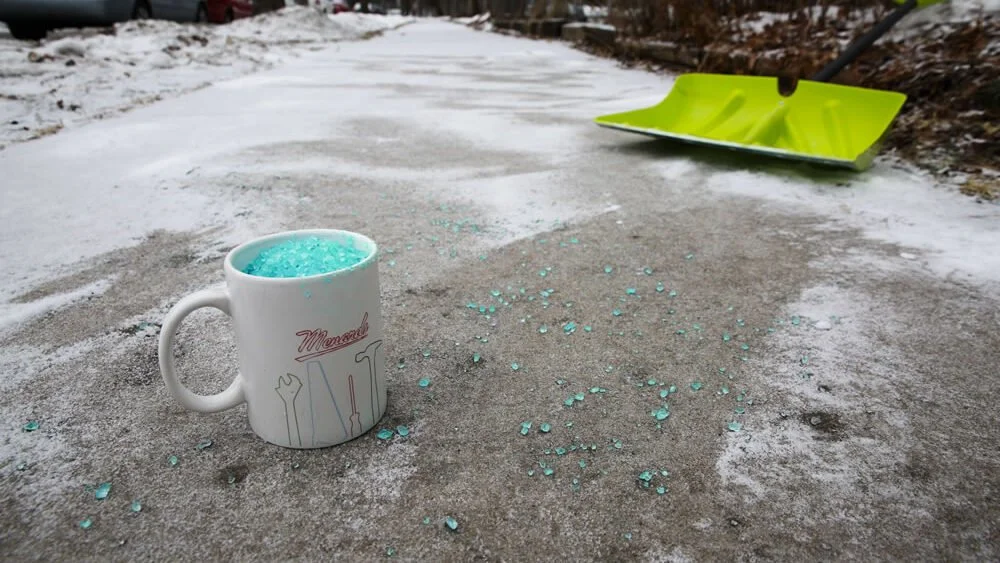
A 12-ounce coffee mug should hold about 1 pound of salt — enough for 250 square feet of pavement. (Photo: Scott Andre)
Provided by the Mississippi Watershed Management Organization (MWMO).
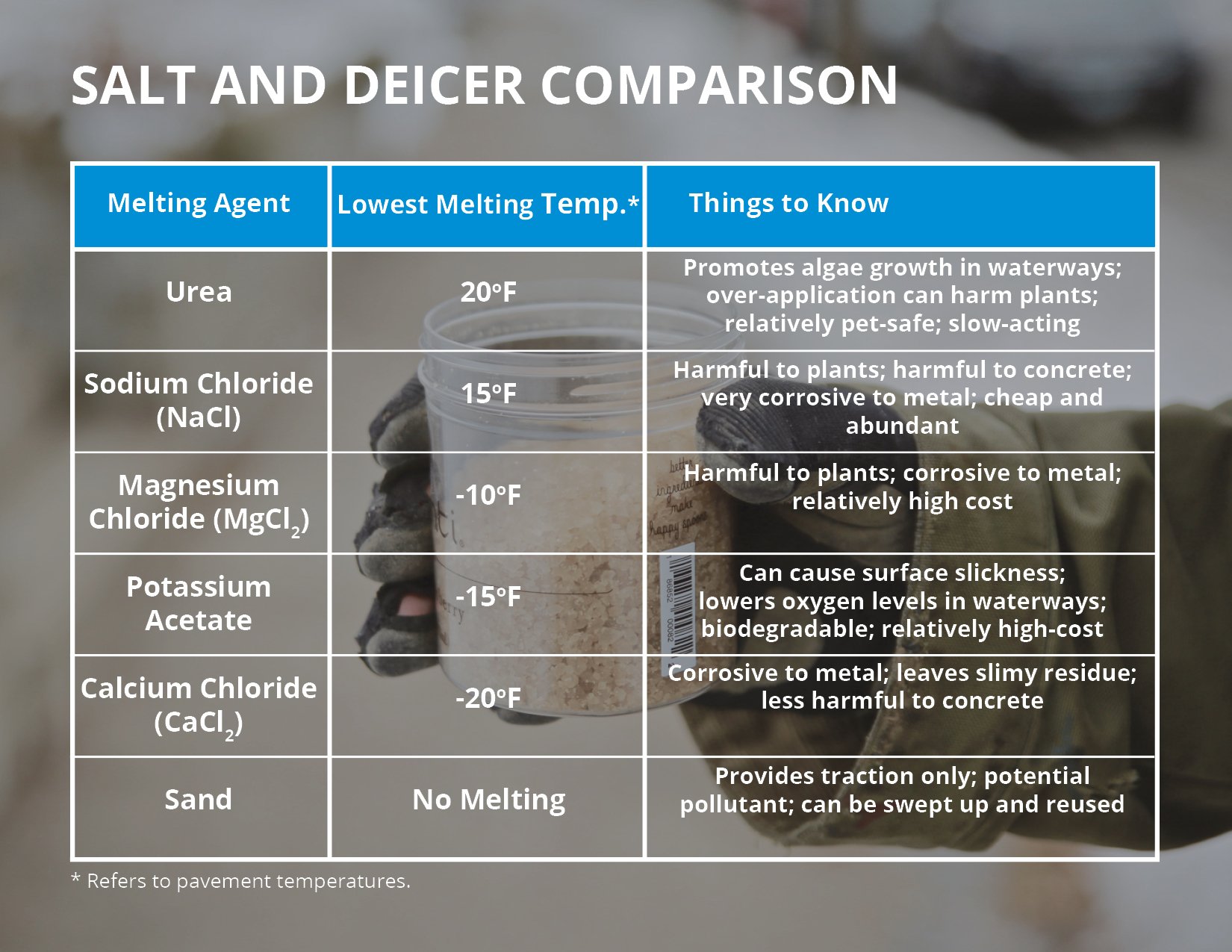
3. Skip Salt Below 15°F
Traditional rock salt (sodium chloride) becomes ineffective below 15°F. Other products like magnesium chloride or calcium chloride work at different temperatures, but when it’s extremely cold, none of them work.
Before salting, always:
Check the pavement temperature (not just air temperature). You can view those on the 511mn.org site!
Read product labels to understand the temperature range in which the deicer works.
Provided by the Mississippi Watershed Management Organization (MWMO).
4. Use Sand or Grit for Traction on Very Cold Days
When salt won’t work, sand or “chicken grit” can help prevent slips. While these materials don’t melt ice, they instead sit on the surface to provide grip.
Sand can add sediment to waterways, so grit is often the better choice. After the ice melts, sweep up any leftover material to prevent pollution and reuse it during the next storm.
5. Never Mix Salt and Sand
They serve entirely different purposes:
Salt melts ice.
Sand provides traction.
Mixing them dilutes each material’s effectiveness and encourages people to use more than necessary.
6. Sweep Up Excess Salt
If you hear crunching under your boots, there’s too much salt on the ground. Sweep up leftover granules after melting to keep chloride out of storm drains and the Mississippi River, local lakes, and groundwater.
Smart Salting on a Larger Scale
Many Twin Cities public works departments have adopted updated smart-salting practices, including:
Pre-wetting the salt so fewer granules are used.
Using liquid brine to reduce bounce and scatter.
Monitoring pavement temperatures.
Training plow crews in best practices to minimize chloride pollution.
These measures have already reduced salt use in some municipalities by 30–50% without compromising road safety. Homeowners and businesses can help extend that impact. For residents who hire private snow removal services, the MPCA offers a list of contractors certified in smart salting techniques. These contractors are trained in chloride reduction methods, proper salt application, and environmentally sensitive winter maintenance.
A complete list of MPCA-certified contractors is available on the MPCA website; you can find it here.
A Cleaner, Safer Winter for Minnesota
As more snow arrives throughout the winter season, state and local organizations are encouraging Minnesotans to stay mindful: every handful of salt matters. Small changes, like shoveling sooner, using less salt, and switching to grit on cold days, can prevent long-term environmental harm. Minnesota’s lakes and rivers are central to its identity, recreation, and wildlife. By salting smarter, residents help ensure cleaner water, healthier ecosystems, and safer communities year-round.
Local watershed districts, including Nine Mile Creek and the Mississippi Watershed Management Organization, offer additional resources and guides for winter maintenance.
For more information on how to protect our waterways during winter, visit:
https://www.mwmo.org/learn/preventing-water-pollution/snow-ice-removal/
Written by: Will Wight
Information and images provided the Mississippi Watershed Management Organization (MWMO).
