
Published: May 22, 2026
WASHINGTON COUNTY, MINNESOTA - The Minnesota Pollution Control Agency (MPCA) has released the results of a seven-year feasibility study examining ways to reduce the spread of PFAS contamination in the East Metro area, outlining a series of large-scale remediation recommendations to protect current and future drinking water supplies.
The investigation focused on contamination associated with the Valley Branch Watershed District’s “Project 1007” stormwater conveyance system and was funded through Minnesota’s 2018 settlement with 3M, which resulted in an $850 million agreement addressing decades of PFAS contamination in the East Metro.
According to the MPCA, the study evaluated how PFAS contamination moves through surface water, sediment, and groundwater systems connected to historical disposal sites in Oakdale and Washington County, and examined potential long-term cleanup strategies.
What Are PFAS?
PFAS, short for Per- and Polyfluoroalkyl Substances, are a large class of human-made chemicals that have been widely used in industrial processes and consumer products for decades. The chemicals are often referred to as “forever chemicals” because they do not easily break down in the environment.
The MPCA says PFAS can move through groundwater and surface water, accumulate in living organisms, and pose potential health risks to humans and wildlife. Minnesota classifies PFAS as hazardous substances, and both the State of Minnesota and the U.S. Environmental Protection Agency regulate several PFAS compounds in drinking water.
Minnesota has also established a statewide strategy to phase out avoidable PFAS use by 2032.
Decades of Contamination in the East Metro
According to the MPCA, PFAS-containing waste generated by 3M was disposed of at multiple locations across the East Metro beginning in the 1940s and continuing into the 1970s.
Major contamination sites include:
Oakdale Disposal Site
Washington County Landfill
Woodbury Disposal Site
3M’s Cottage Grove Facility
The State of Minnesota sued 3M in 2010 over widespread contamination impacts. That lawsuit was settled in 2018 for $850 million, with priorities including ensuring safe drinking water and restoring natural resources.
The Project 1007 PFAS investigation was one of the major studies funded through that settlement.
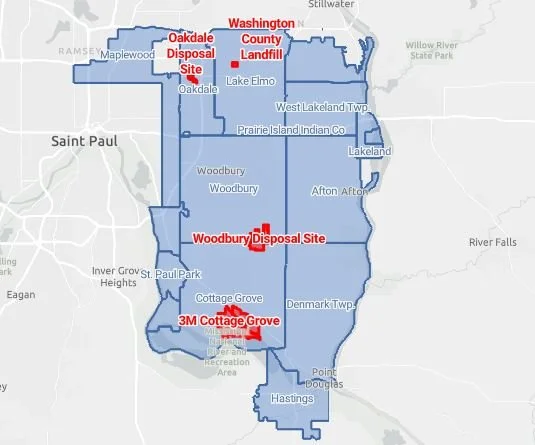
Provided by the MPCA Project 1007 PFAS Investigation.
What Is Project 1007?
Project 1007 is a flood mitigation system completed in 1987 in the Tri-Lakes area near Oakdale and Lake Elmo. The system includes channels, pipes, dams, wetlands, and lakes designed to move stormwater efficiently from the Tri-Lakes area toward the St. Croix River.
According to the MPCA, investigators determined that the same water movement system contributes to the migration of PFAS contamination through both surface water and groundwater.
The study found contamination pathways involving:
Raleigh Creek
Eagle Point Lake
Lake Elmo
Horseshoe Lake
West Lakeland Storage Ponds
Multiple wetland systems connected to Project 1007
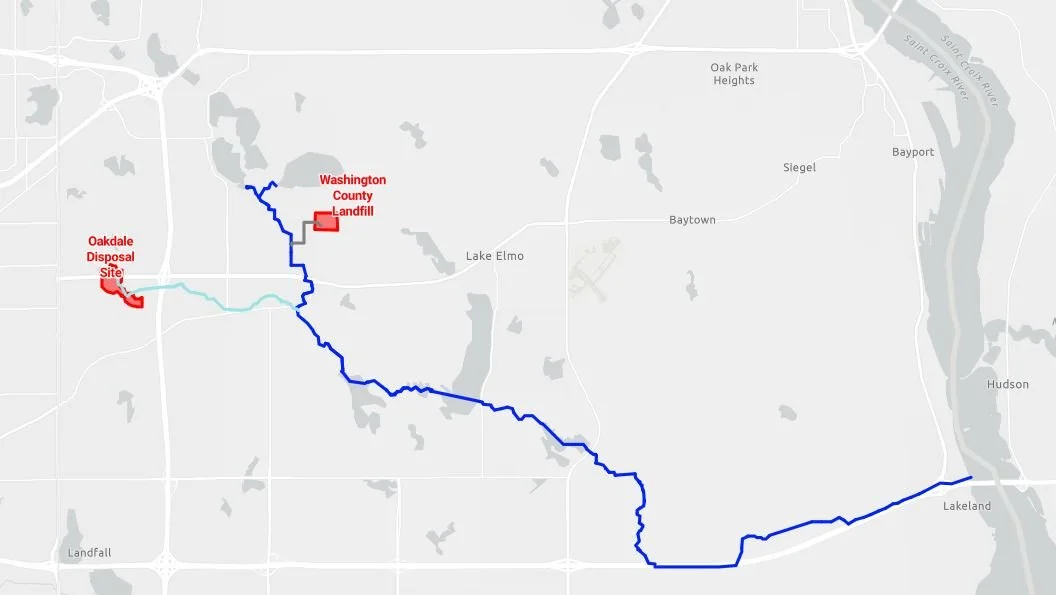
Provided by the MPCA Project 1007 PFAS Investigation.
How PFAS Move Through the Project 1007 System
Oakdale Disposal Site
According to the MPCA, PFAS contamination migrates through groundwater beneath the Oakdale Disposal Site and enters Raleigh Creek, which then carries the contamination into the broader Project 1007 system.
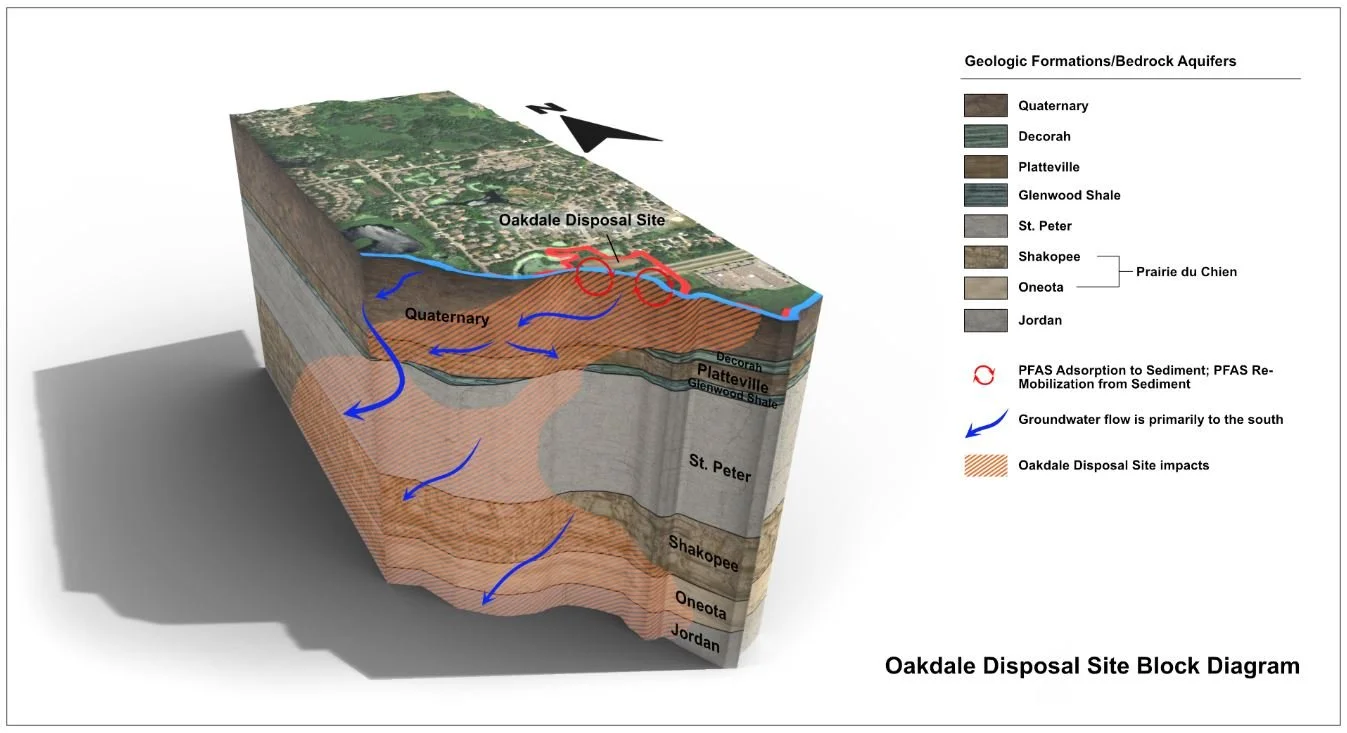
Provided by the MPCA Project 1007 PFAS Investigation.
Raleigh Creek
Investigators found that PFAS move from the Oakdale Disposal Site into Project 1007 through Raleigh Creek surface water.
Raleigh Creek flows through several wetlands immediately downstream of the disposal site. The MPCA says PFAS infiltrate into groundwater throughout these wetland areas and along Raleigh Creek itself.
The agency says those groundwater impacts eventually combine with contamination migrating from the Washington County Landfill.
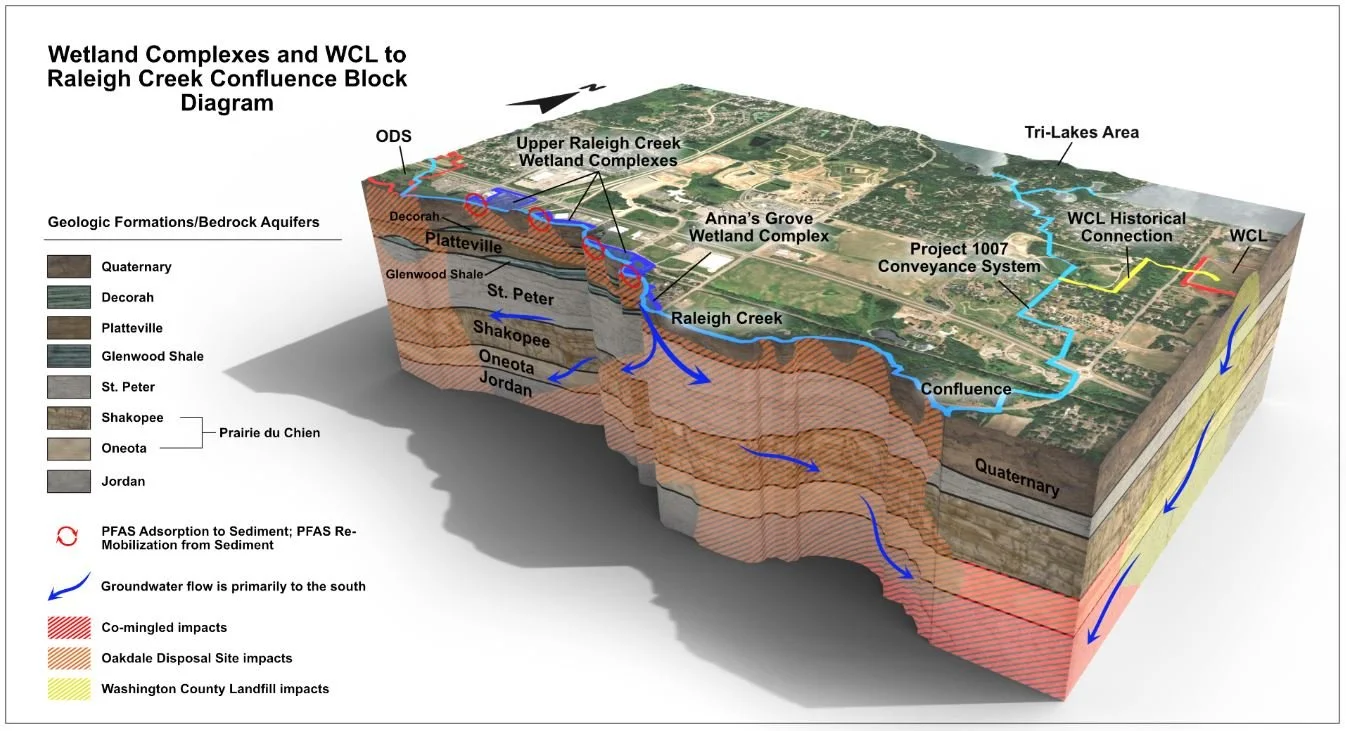
Provided by the MPCA Project 1007 PFAS Investigation.
Washington County Landfill
The MPCA says PFAS contamination also migrates through groundwater beneath Washington County Landfill.
According to investigators:
PFAS-contaminated groundwater discharges into Sunfish Lake and Lake Elmo
Contamination enters Project 1007 through Lake Elmo
PFAS from the landfill then mixes with contamination originating from the Oakdale Disposal Site
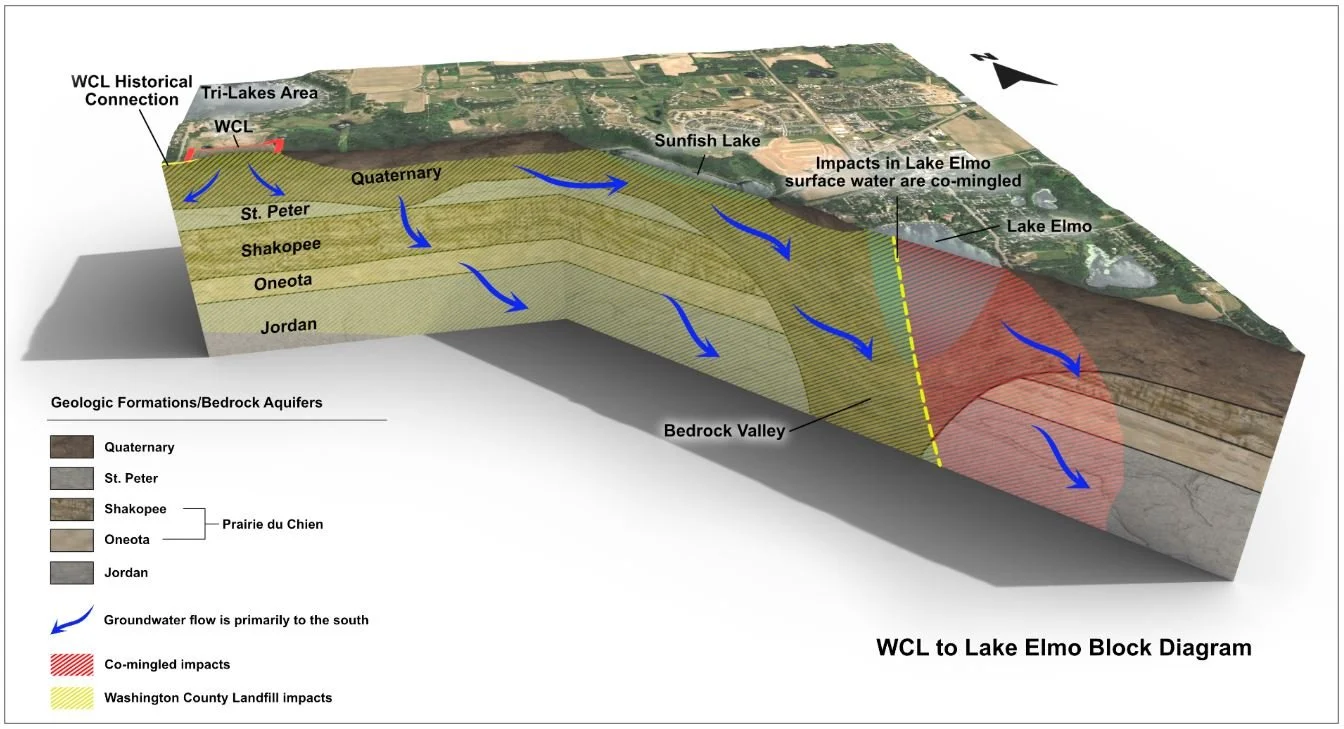
Provided by the MPCA Project 1007 PFAS Investigation.
Eagle Point Lake
The study found PFAS migrate into Eagle Point Lake through Raleigh Creek surface water.
According to the MPCA, contamination in Eagle Point Lake is both:
Infiltrates downward into the groundwater
Continues moving through Project 1007 surface water toward West Lakeland
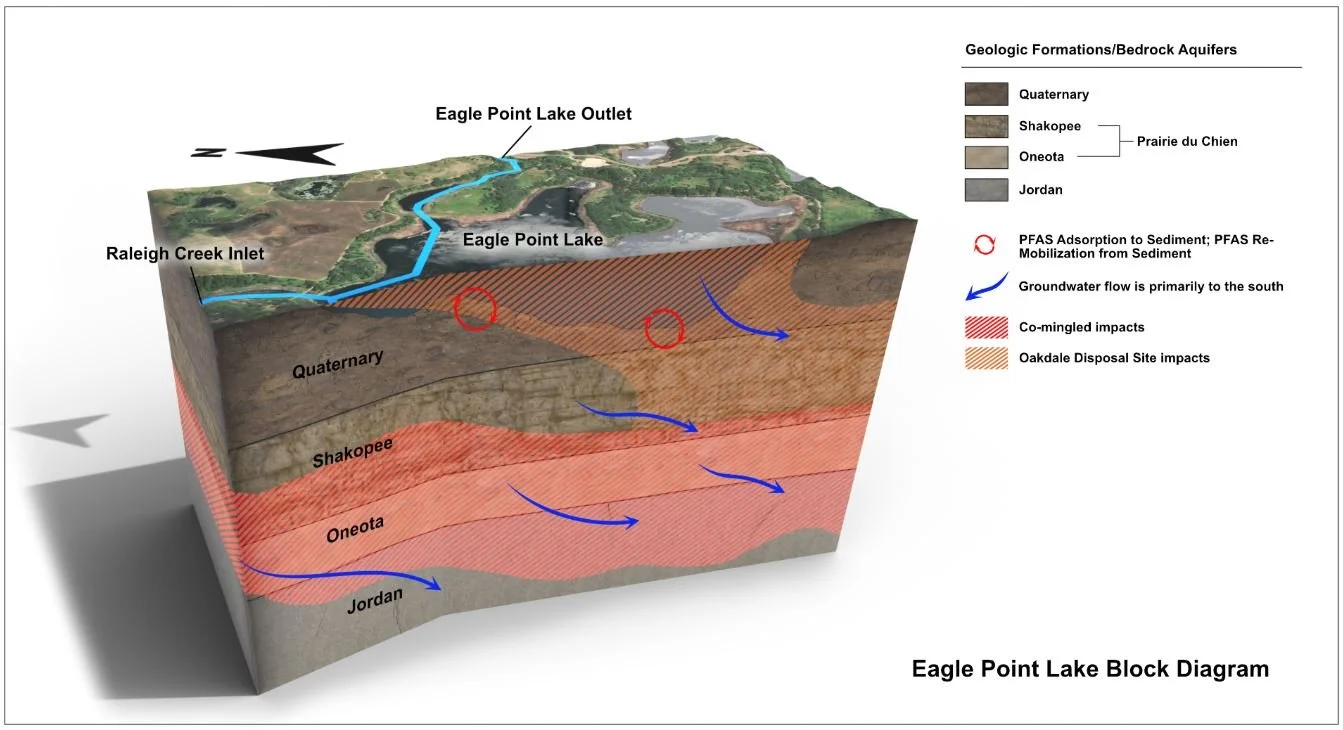
Provided by the MPCA Project 1007 PFAS Investigation.
Lake Elmo to West Lakeland
The MPCA says PFAS-contaminated groundwater discharges into Lake Elmo on the west side, while contamination infiltrates back into groundwater on the east side.
Investigators found PFAS continue moving through Project 1007 surface water toward:
Horseshoe Lake
West Lakeland Storage Ponds
The agency says PFAS infiltrate into groundwater at both locations before surface water from the West Lakeland Storage Ponds ultimately flows into the St. Croix River.
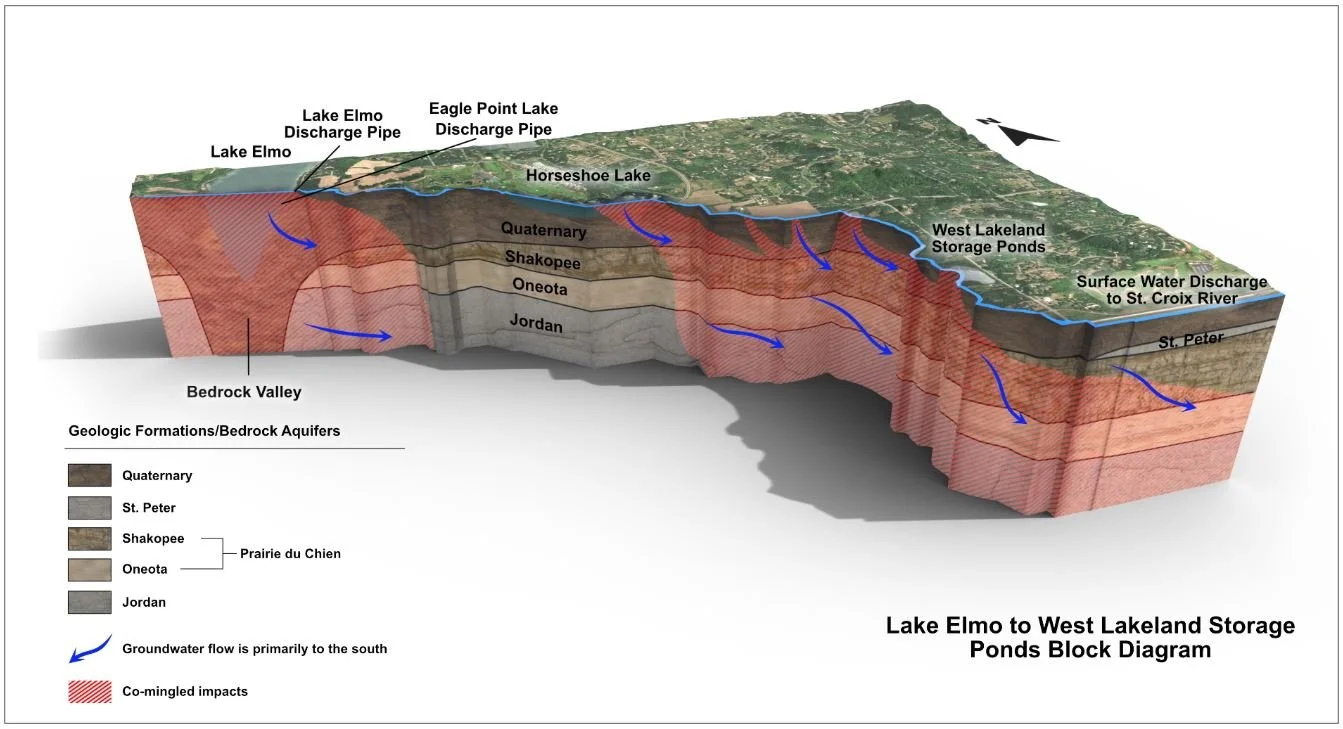
Provided by the MPCA Project 1007 PFAS Investigation.
Seven Years of Investigation and Sampling
As part of the remedial investigation, MPCA conducted extensive surface water sampling and hydrology studies throughout the Project 1007 area.
Because the system is designed to rapidly move water from the Tri-Lakes area toward the St. Croix River, investigators examined how PFAS-contaminated water infiltrates groundwater throughout the watershed.
According to the MPCA:
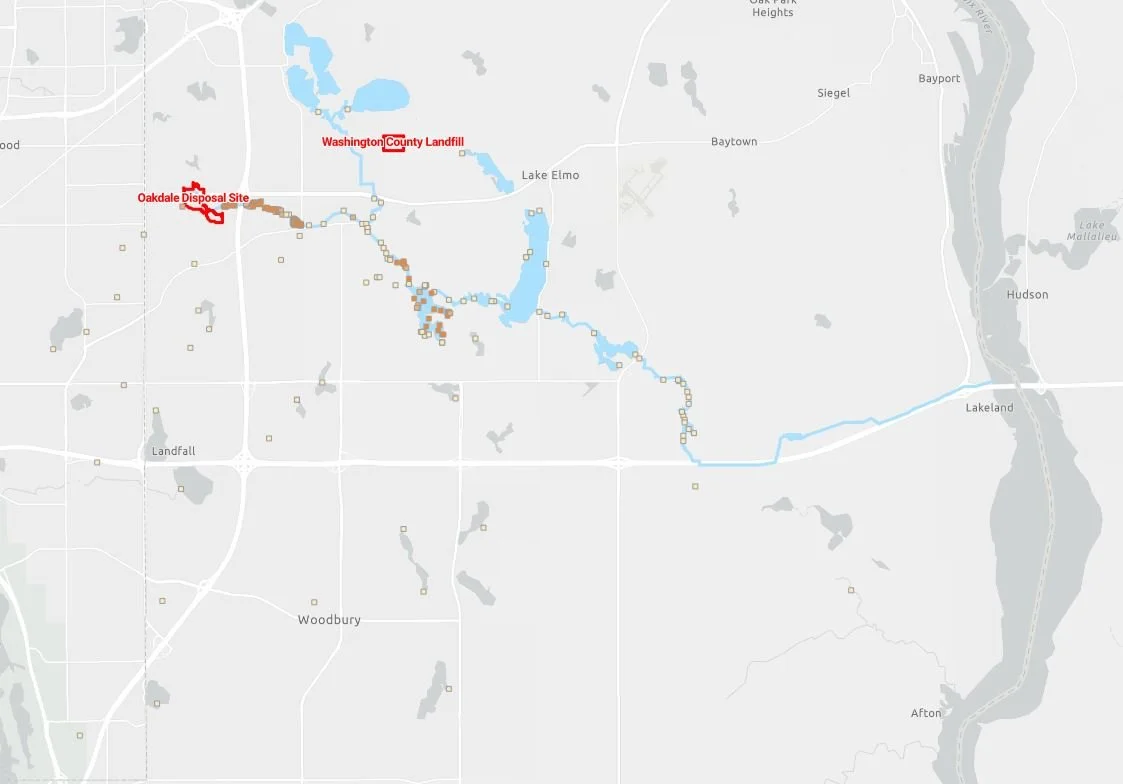
More than 165 unique surface water locations were sampled
Replicate samples were collected at key locations to evaluate changing PFAS concentrations over time
Sampling occurred during all seasons and hydrologic conditions, including rainfall, snowmelt, and drought periods
Investigators also collected:
Surface water elevation data
Water flow measurements
Hydrologic information is used to better understand how contamination moves through the system
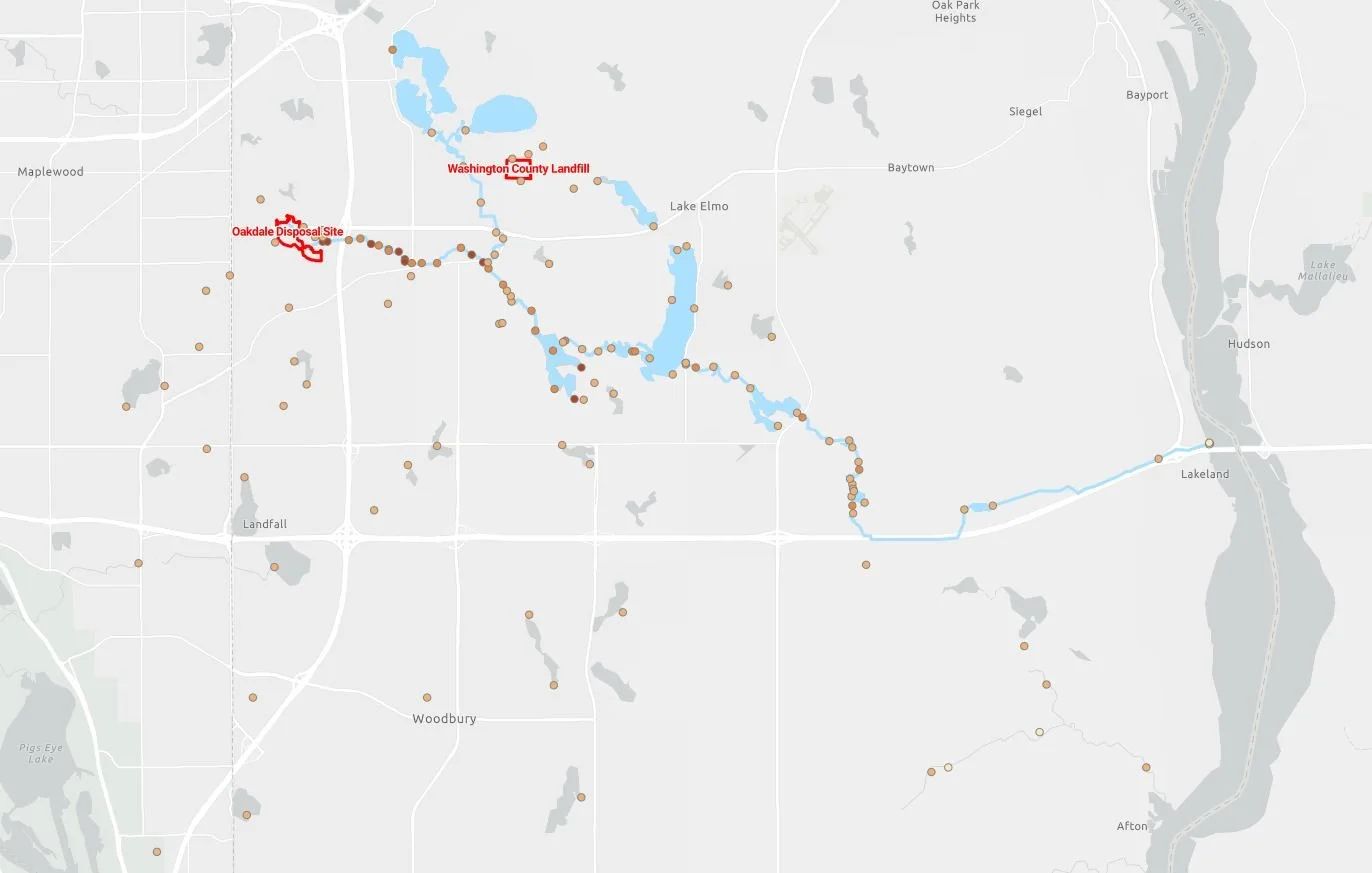
Surface Water Sampling and Results Map for PFOS Provided by the MPCA Project 1007 PFAS Investigation. You can go to the study to see the PFOA results as well.
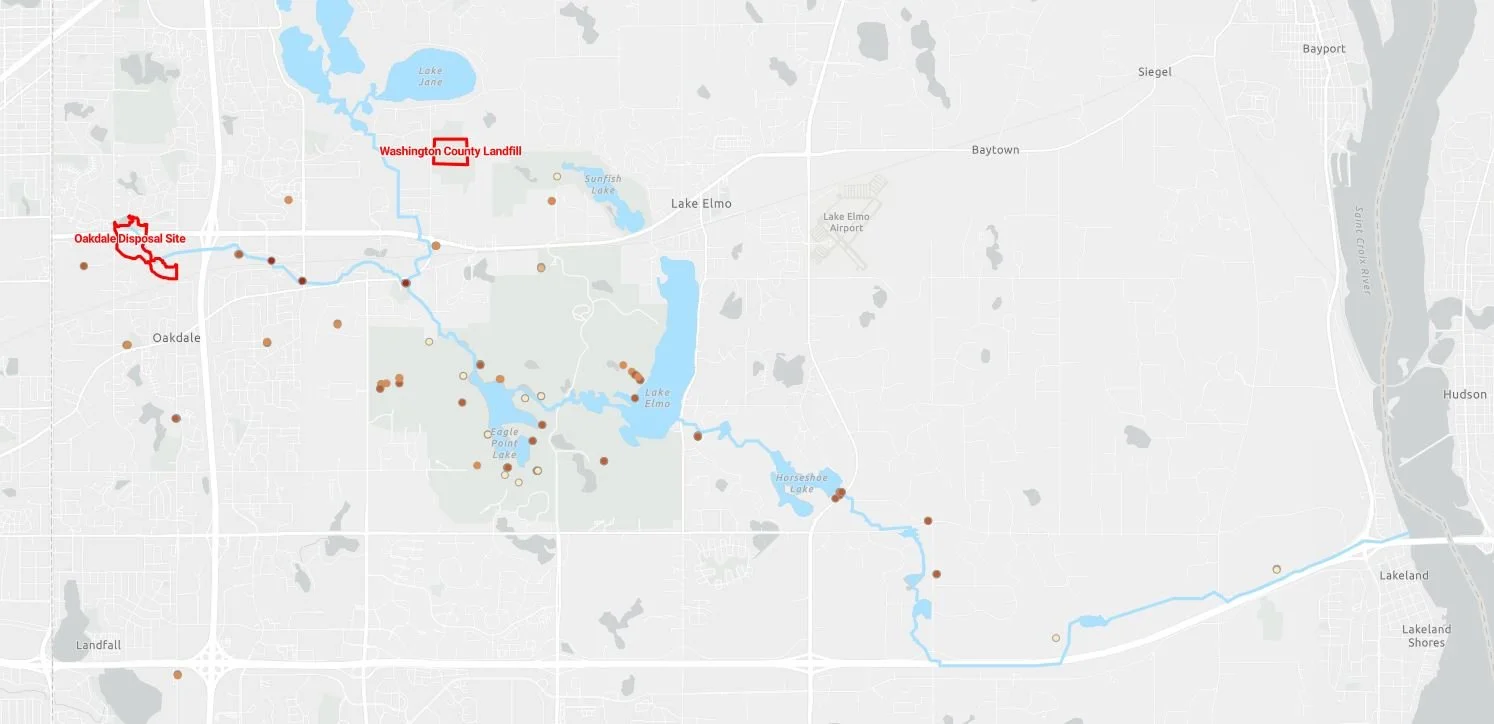
Sediment Sampling and Results Map for PFOS Provided by the MPCA Project 1007 PFAS Investigation. You can go to the study to see the PFOA results as well.
Groundwater Sampling and Results Map for PFOS Provided by the MPCA Project 1007 PFAS Investigation. You can go to the study to see the PFOA results as well.
Foam Samples Raise Additional Concerns
The investigation also included sampling of foam from surface water bodies.
While foam can naturally occur in lakes, wetlands, and streams, the MPCA says foam in PFAS-impacted waters may contain concentrated PFAS levels and could pose health risks.
The agency recommends:
People avoid contact with foam in PFAS-contaminated waters
Pets also avoid exposure
Anyone who comes into contact with foam should thoroughly wash exposed skin
Sediment Found to Act as Secondary PFAS Source
The MPCA also studied how PFAS interacts with sediment throughout wetlands, lakes, streams, and ponds connected to Project 1007. According to investigators, PFAS in surface water can attach to, or “sorb,” sediment particles. Depending on sediment type, PFAS can accumulate to high concentrations and later leach back into water systems.
The agency says contaminated sediment can become a secondary source of PFAS pollution, contributing to ongoing contamination of both surface water and groundwater.
As part of the study:
Sediment samples were collected from 105 unique locations
Samples were taken from multiple sediment depths and types
Repeat sampling occurred at certain locations over time to monitor changes
Groundwater Movement a Major Focus of Investigation
The MPCA says the connection between surface water and groundwater plays a critical role in how PFAS spreads throughout the East Metro.
According to the study:
PFAS infiltrates from surface water through sediment into groundwater aquifers
Once underground, PFAS spreads horizontally through aquifers
Contamination can also migrate vertically into deeper drinking water aquifers
The movement of PFAS underground is influenced by:
Surface water infiltration
Geological features underground
Municipal pumping wells are used for drinking water systems
To better understand how contamination moves through drinking water aquifers, the MPCA installed 105 groundwater monitoring wells across the study area at varying depths.
Investigators collected and analyzed:
More than 1,200 groundwater samples
Samples tested for 40 PFAS compounds, including: PFOS, PFOA, PFBA, PFHxS, PFHxA, and PFBS
Seasonal sampling during rainfall, snowmelt, drought, and changing hydrologic conditions
In some cases, groundwater wells were intentionally placed near surface-water sampling locations to better understand the relationship between surface-water and groundwater contamination. Groundwater elevation measurements and aquifer characterization data were also collected to better define the region’s hydrogeology and PFAS migration patterns.
Recommended Cleanup and Remediation Actions
The feasibility study evaluated multiple potential cleanup strategies and ultimately recommended a large-scale regional remediation effort intended to:
Protect current and future drinking water supplies
Slow or stop the spread of PFAS contamination
Reduce pressure on municipal treatment systems
Protect currently unaffected groundwater areas
Recommended Cleanup and Remediation Actions
The feasibility study evaluated multiple potential remediation strategies intended to:
Protect current and future drinking water supplies
Slow or stop PFAS migration
Reduce strain on municipal water treatment systems
Protect currently unaffected groundwater resources
Source Area Treatment
Additional localized remediation is recommended at:
Oakdale Disposal Site
Washington County Landfill
The MPCA says reducing high PFAS concentrations near source areas would improve the effectiveness of larger regional treatment systems.
Estimated costs:
Capital costs: $16.9 million to $48.6 million
Annual operating costs: $1.5 million to $44.4 million
Surface Water Treatment
The study recommends installing “Permeable Adsorptive Barriers” (PABs) at key locations within Project 1007.
These barriers are designed to remove PFAS from flowing surface water while still allowing water to pass through naturally.
Estimated costs:
Capital costs: approximately $3.3 million
Annual operating costs: approximately $830,000
Sediment Access Restrictions
Because some sediment contains elevated PFAS concentrations, the MPCA recommends:
Fencing
Warning signage
Public access restrictions in impacted areas
Estimated costs:
Capital costs: approximately $1.5 million
Annual operating costs: approximately $24,000
Multi-Benefit Well Array
The largest proposed remediation project is a regional “Multi-Benefit Well Array.”
The proposed system would:
Extract contaminated groundwater
Treat PFAS-contaminated water
Supply treated drinking water to Oakdale and Lake Elmo
Reinject additional treated water into aquifers to help create a hydraulic barrier against plume migration
The MPCA says the system would intentionally pump more groundwater than necessary for municipal demand in order to better contain contamination spread.
Estimated costs:
Capital costs: $204 million to $349 million
Annual operating costs: $9.8 million to $38.7 million
Cost Comparison
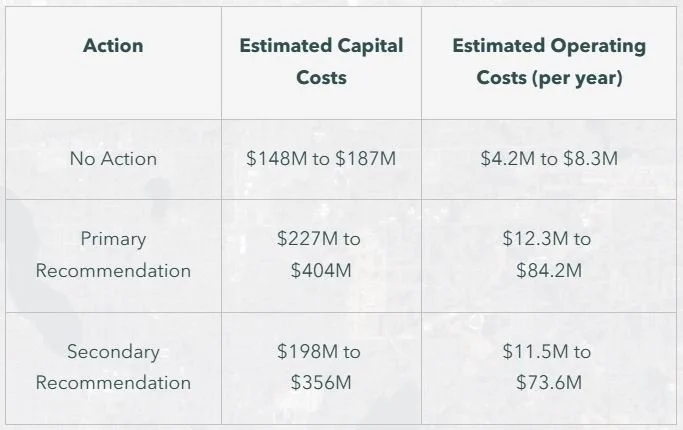
The MPCA compared multiple approaches, including a “No Action” scenario.
According to the agency, the long-term cost of maintaining safe drinking water without addressing PFAS migration is expected to continue rising as contamination spreads into additional municipal and residential well systems.
Estimated Cost Ranges:
Provided by the MPCA Project 1007 PFAS Investigation.
The “secondary recommendation” includes a smaller well array and a localized pump-and-treat system in West Lakeland Township to reduce costs while still addressing contamination concerns.
Additional Work Still Needed
The MPCA emphasized that the feasibility study does not represent a final remediation design.
Officials say additional work remains necessary before full-scale cleanup implementation can begin, including:
Additional groundwater monitoring
Further investigation into the contamination source areas
Pilot testing of treatment technologies
Additional study of the Jordan aquifer
Coordination with municipalities and state agencies
Evaluation of possible hydrogeologic connections to White Bear Lake
The MPCA says it will continue working with impacted communities, state agencies, and settlement co-trustees to refine and finalize remediation strategies.
Officials noted that PFAS contamination in the East Metro remains an evolving environmental and public health issue, with contamination plumes expected to continue spreading over time without intervention.
Written by: Will Wight
Images and Information Provided by the MPCA Project 1007 PFAS Investigation.



Remodeling your Twin Cities kitchen? Compare stock, semi-custom, and custom cabinets, including costs, materials, durability, and design options.