
Minnesota’s Hands-Free Driving Law: Why It Exists and What the Data Shows
Published: January 2, 2025
MINNESOTA – Distracted driving continues to be a significant safety concern on Minnesota roads, contributing to thousands of crashes each year. In response, the state enacted its Hands-Free Driving Law, which restricts how drivers may use cell phones and other electronic devices while operating a vehicle.
The law is designed to reduce preventable crashes by keeping drivers’ hands on the wheel and their attention on the road. Statewide crash data shows why that focus remains critical.
What Is Minnesota’s Hands-Free Law?
Minnesota’s Hands-Free Law makes it illegal for drivers to hold a cell phone or other electronic communication device while driving. This includes:
Talking on a handheld phone
Texting or messaging
Scrolling social media
Watching videos or browsing the internet
The law applies whenever a vehicle is in traffic, including when stopped at traffic lights or stop signs, or in congestion.
Drivers may use phones only via hands-free or voice-activated technology.
What Is Allowed?
The law permits limited use in specific situations, including:
Hands-free phone calls using Bluetooth or vehicle systems
Voice commands or dashboard-integrated controls
A single touch to activate or end a call, GPS, or voice control
GPS navigation if the device is mounted and not held
Emergency calls to 911
Phone use while legally parked and not in traffic
Scrolling, typing, or holding a device remains prohibited.
Distracted Driving by the Numbers: Minnesota (2025)
Preliminary 2025 Minnesota crash statistics from the Minnesota Department of Public Safety indicate that distraction continues to affect roadway safety.
Statewide Crash Overview (All Causes)
64,068 total crashes
17,344 injury crashes
23,490 people injured
350 fatal crashes
371 total fatalities
While most crashes are not caused by distraction, confirmed distracted-driving crashes accounted for approximately 3,585 incidents statewide, or about 1 in every 18 crashes.
Distracted Driving Crash Breakdown — Statewide
Among crashes where distraction was identified:
Manual operation of an electronic device: 432 crashes
Talking on a handheld phone: 705 crashes
Talking on a hands-free device: 190 crashes
Passenger-related distractions: 176 crashes
Other electronic device activity: 66 crashes
Distractions outside the vehicle: 95 crashes
Unknown distraction type: 23,771 crashes
Not distracted: 47,575 crashes
Public safety officials note that the large “unknown” category reflects the difficulty of conclusively identifying distraction after a crash, meaning actual distraction involvement may be higher than confirmed totals.
Dakota County: A Local Snapshot
Crash data from Dakota County mirrors statewide trends, with distracted driving accounting for a smaller share of total crashes but still resulting in serious outcomes.
Dakota County Crash Summary (2025)
6,339 total crashes
1,632 injury crashes
2,298 people injured
20 fatal crashes
23 total fatalities
Of those, approximately 340 crashes were confirmed as distraction-related, roughly 1 in every 19 crashes countywide.
Distracted Driving Behaviors — Dakota County
Manual electronic device use: 42 crashes
Handheld phone use: 70 crashes
Hands-free phone use: 9 crashes
Passenger-related distractions: 188 crashes
Other electronic device activity: 35 crashes
Distractions outside the vehicle: 13 crashes
Unknown distraction type: 2,747 crashes
Not distracted: 4,866 crashes
As with statewide data, many distraction-related crashes could not be conclusively classified.
Related Stories
Why the Hands-Free Law Focuses on Phones
The Hands-Free Law specifically targets handheld phone use, one of the most easily identifiable and enforceable forms of distraction.
According to the Minnesota Department of Public Safety, manual phone use significantly increases reaction time and crash risk. Enforcement efforts by the Minnesota State Patrol consistently emphasize that even brief phone use can have serious consequences. Eagan Police, Dakota County, and Minnesota State Patrol teamed up back in September 2025 for this Traffic Safety Operation: Eagan Police, Dakota County, and Minnesota State Patrol Catch 173 Drivers in Back-to-School Traffic Safety Operation.
While distracted driving is not the leading cause of all crashes, officials stress it is one of the most preventable.
Penalties for Violating the Law
First offense: Fine starting at $50 (plus court fees)
Repeat offenses: Higher fines and possible misdemeanor charges
Crashes involving injury or death: Can result in more serious criminal penalties
Violations may also impact insurance rates and driving records.
What Drivers Can Do to Stay Safe
Set navigation and music before driving
Enable Do Not Disturb While Driving
Use a secure phone mount for GPS
Let calls go to voicemail when possible
Pull over safely if phone use is necessary
Understanding the Data
Crash Data Note: The data used for the Minnesota crash reports for 2025 are preliminary and are continually submitted and updated as investigations progress. Totals may change over time as reports are added or corrected. The figures cited reflect the most current data available at the time of publication.
Because distraction is often difficult to prove after a crash, confirmed distracted-driving totals should be viewed as a minimum, not a ceiling.
Bottom Line
Minnesota’s Hands-Free Law is not just about avoiding tickets — it is about reducing preventable crashes and protecting lives. Crash data show that distraction continues to affect road safety statewide and locally, even when it accounts for a smaller share of total crashes.
Keeping phones out of drivers’ hands remains one of the simplest ways to reduce risk on Minnesota roads.
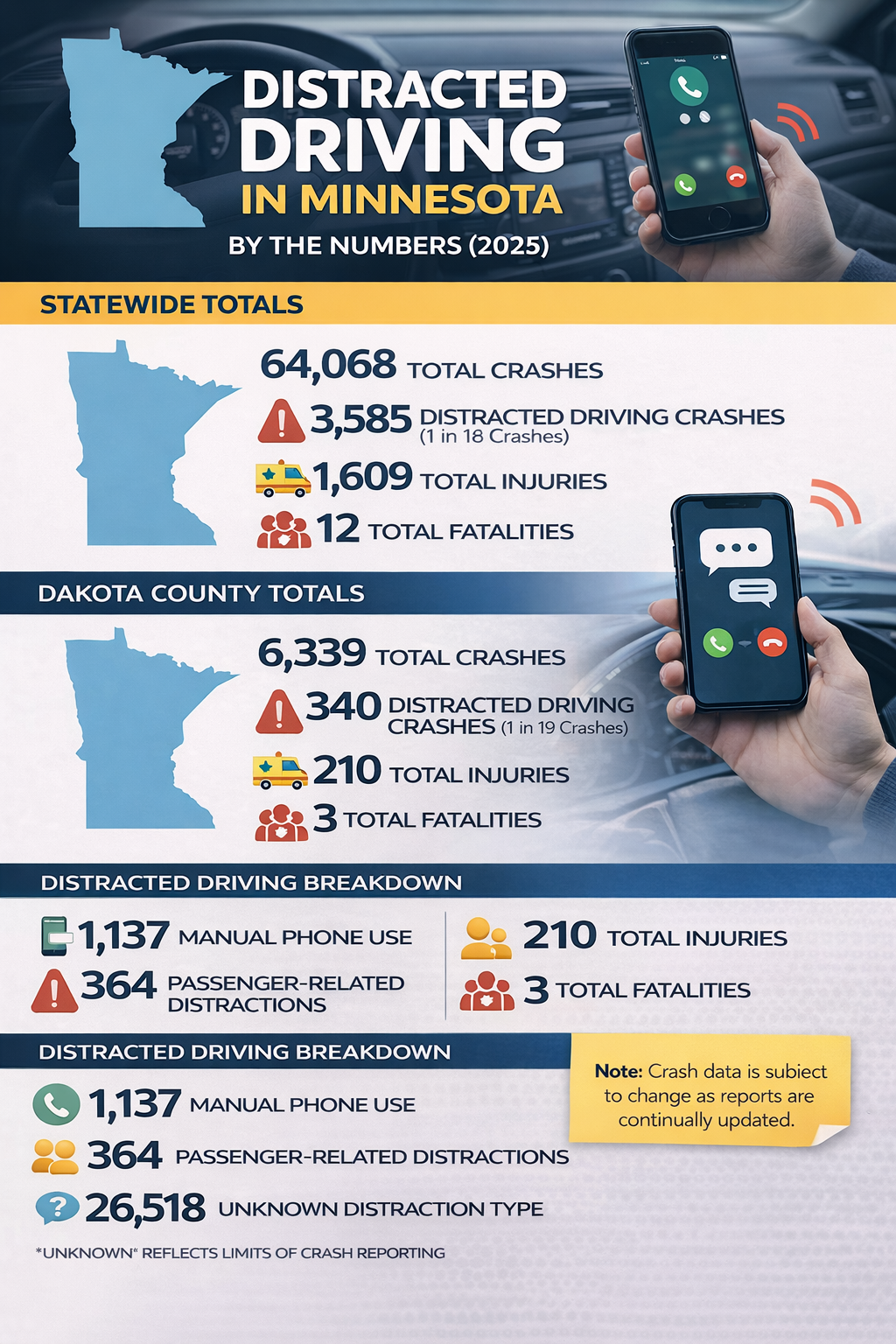
Data provided by the Minnesota Department of Public Safety.
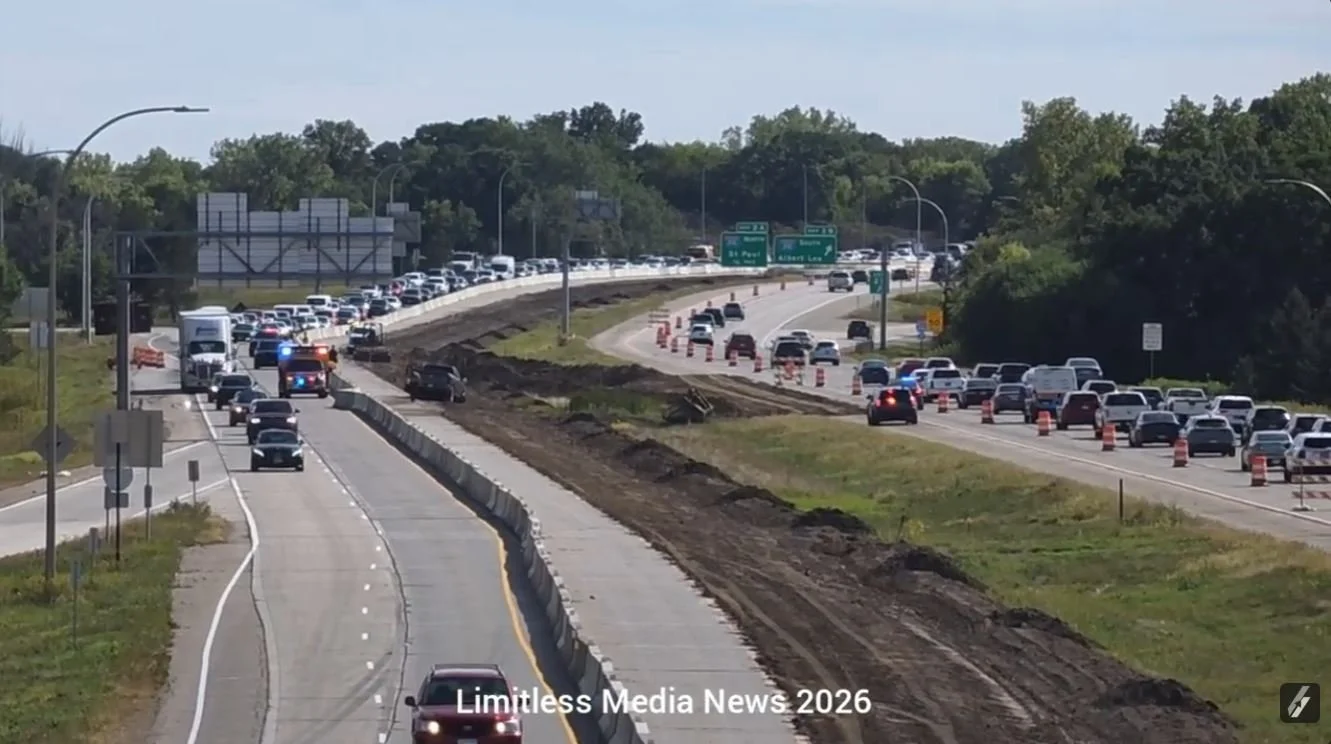



A 46-year-old Inver Grove Heights man was cited after a rollover crash on Highway 3 near Salem Church Road in Sunfish Lake, according to the Minnesota State Patrol.